
Commercial Refrigeration Service in Columbus
The Cost of Commercial Refrigeration Failure
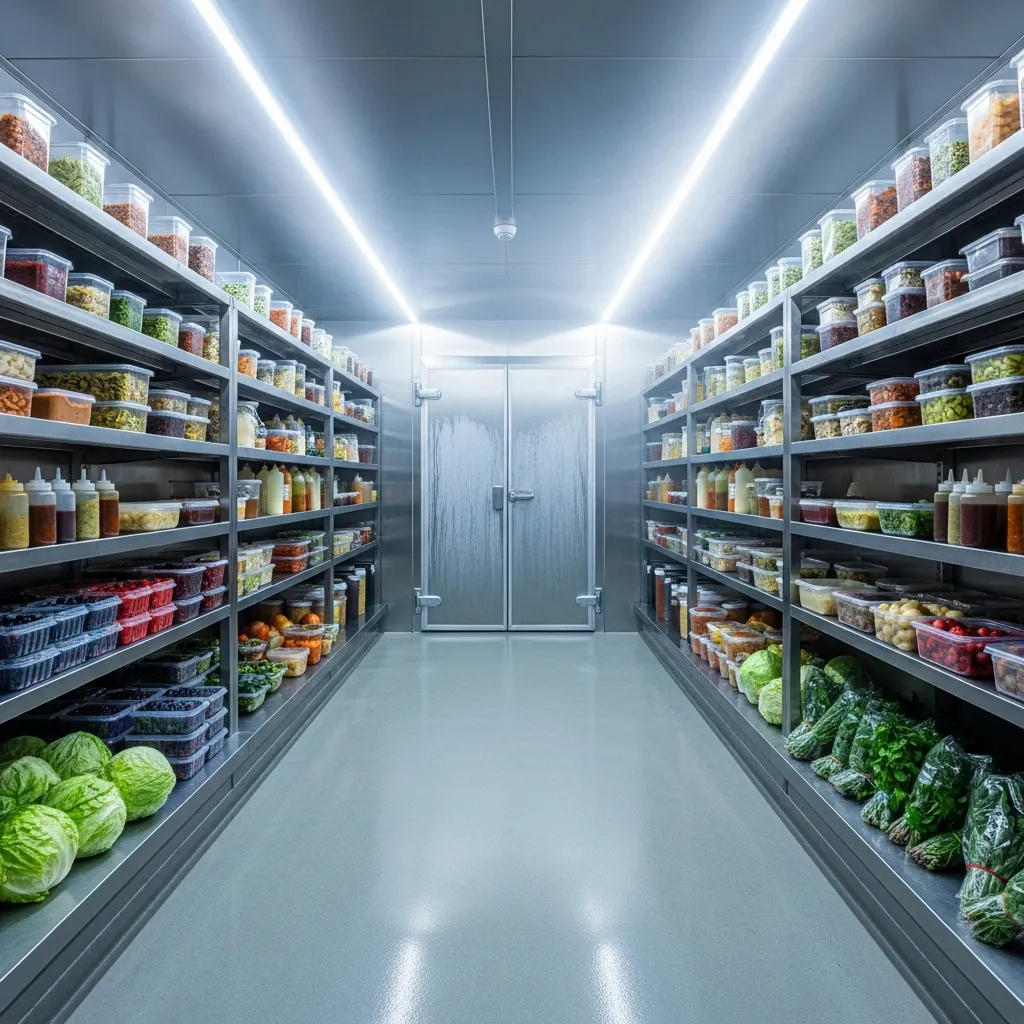
A walk-in freezer failure at a mid-size Columbus restaurant can put significant product value at risk within hours — beef, seafood, dairy, and prepared inventory pulled from cold-holding for too long may need to be evaluated under your facility's food-safety plan and local health-department guidance. A grocery walk-in cooler failure during weekend hours can cascade across produce, dairy, deli, and meat departments. The request line flags requests with product at risk ahead of routine work — see walk-in cooler and walk-in freezer request pages for emergency intake details.
Columbus as a Food Service Market
Columbus and Central Ohio support a deep food-service base: independent restaurants, regional restaurant groups, fast-casual and quick-service chains, supermarkets, convenience stores, an active craft brewery and taproom scene, Ohio State University dining, hospital and long-term-care kitchens, hotel and event venues, K-12 cafeterias, and refrigerated distribution along the I-70 and Rickenbacker corridors. The result is continuous commercial refrigeration demand across restaurants, grocery, hospitality, healthcare, and cold storage — covered through the service-area page.
Common Walk-In Cooler & Freezer Problems
Most commercial walk-in failures fall into a few categories: compressor failures, refrigerant leaks, defrost cycle issues, door gasket failures, evaporator coil problems, condenser fans, and control board faults. Identifying the category at intake helps route the request to an appropriate provider.
Ice Machine Failures and What to Photograph
Commercial ice machine failures cluster around production failures, water supply problems, scale buildup on evaporator plates, condenser problems on air-cooled units, and control board issues. Photos of the nameplate, front-panel error display, evaporator if accessible, and water inlet connections help the provider arrive prepared — Manitowoc, Hoshizaki, Scotsman, and Ice-O-Matic each have brand-specific diagnostic flows.
Ohio Cold-Holding Rules & Temperature Documentation
Cold-holding of potentially hazardous foods is commonly held at 41°F or below under the Ohio Uniform Food Safety Code (which adopts the FDA Food Code), and a sustained refrigeration failure can create both food-safety risk and downstream documentation work for your local Ohio health department. Health departments may ask when the failure occurred, when it was identified, what corrective action was taken, when equipment recovered to compliant temperature, and what product was discarded. Repair, refrigerant handling, and temperature recovery documentation may be requested from the dispatched provider as part of the service call. Food-disposition decisions are made by the facility under its own food-safety plan and local health-department guidance — see the FAQ for related questions.
EPA Section 608 and Refrigerant Handling
Refrigerant recovery, recycling, recharging, and disposal require EPA Section 608 certification under federal regulations. For any request involving refrigerant handling, ask the dispatched provider to confirm the appropriate Section 608 certification before work begins; documentation can be requested directly from the provider.
Why Photos Help at Intake
Three photo categories help: nameplate for parts; failure-point photos for triage; and timestamped temperature photos for the failure timeline. Sending these at the call helps the dispatched provider arrive prepared.
Service Area Coverage
Requests are routed across Columbus and Central Ohio, including Columbus, Groveport, Obetz, Lockbourne, Grove City, Hilliard, Dublin, New Albany, Gahanna, Westerville, Reynoldsburg, Canal Winchester, Pickerington, Pataskala, Newark, Powell — Franklin, Fairfield, Licking, and Delaware counties.